 Hey everyone. Just having a perfectly normal one over here. Nuh uh, nothing weird or strange or stress-inducing at all. Just vanilla. Just honky dory. Uh-huh. Anyway, tell me what you’re listening to. You can reach me at nicholas.quah@nymag.com or find me on Twitter. And hey, if you like 1.5x Speed, throw your phone into the next room. —Nick Quah |
| Quick breaking news: Alex Goldman and Emmanuel Dzotsi, the remaining hosts of Reply All, are leaving the show to “explore opportunities outside of Gimlet,” The Verge’s Ariel Shapiro reports. |
| This doesn’t necessarily spell the end of Reply All, however. According to an internal note sent by Gimlet executives this morning, “The decision to end this iteration of the show came from a desire of the host team to move on, and we hope that there is a future where a show about the internet that isn’t actually about the internet can be reborn in Gimlet’s library.” |
| But it does mean the definitive end of Reply All as we knew it — which is a feeling that already existed thanks to … well, you know. The last episode will drop on June 23. |
| Want more recommendations from our critics? Subscribe now for unlimited access to Vulture and everything New York. |
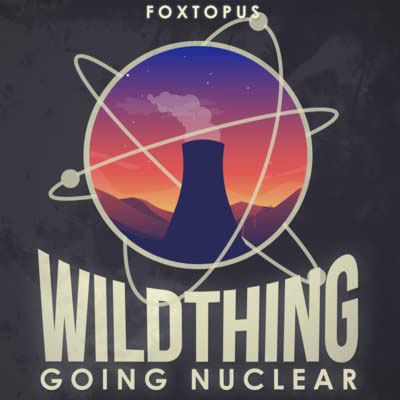
| Wild Thing: Going Nuclear, from Foxtopus Ink, opens with grisly detail. On a freezing night in early 1961, emergency responders were called to an accident at a nuclear reactor: A procedural mishap had caused a steam explosion. There had been three young military servicemen on duty that night. One was found dead. Another was injured, and died shortly thereafter. The third was later recovered near the ceiling, having been impaled by an ejected control rod. It would take multiple days for the rescue team to recover all the bodies, a process during which several rescuers were exposed to dangerous radiation. The event remains the only time that a nuclear meltdown caused immediate fatalities in American history. |
| The facility was Stationary Low-Power Reactor Number One (SL-1), an experimental reactor managed by the U.S. Army located near the small town of Idaho Falls, Idaho. It was located where what is now known as the Idaho National Laboratory — which continues to actively conduct nuclear research — currently sits. Yet, it is a matter of historical curiosity that the incident hasn’t been as deeply codified into nuclear history lore as, say, the Three Mile Island accident of the late seventies. According to Wild Thing host Laura Krantz, that probably has a lot to do with the politics of the times. The sixties were a moment of great optimism around the potential of nuclear power, which rendered the SL-1 meltdown an acceptable cost for the greater good. Much has changed in the intervening decades, of course: Other reactor accidents, both within the US and around the world, have increasingly stacked the perception of nuclear energy as being an intolerable, existential risk. |
| But interest has been swinging back in recent years, particularly as the search for effective clean energy alternatives becomes more pressing. (The ongoing conflict in Ukraine presumably added further fuel to the fire, so to speak, given how it underlines the geopolitical benefits of energy independence.) A native of Idaho Falls herself, Krantz begins Going Nuclear with the semi-forgotten tale of SL-1 as a way to set the scene for the uneasy tension baked into the growing national reconsideration as to whether America should brush up its commitment to the high-risk, high-reward energy source. Sure, nuclear energy might well be a solution to our growing climate crisis, but can we human beings be trusted not to fuck it all up? |
| A terribly unsettling question, and Krantz signals early in the series that she intends to get into the weeds of the multiple perspectives at play over the course of the series. Going Nuclear serves as the third outing of Wild Thing, her science-themed narrative podcast series. Krantz’s previous efforts have a distinctly goofy streak — the last two seasons tackled the possible existence of Bigfoot and our persistent interest in extraterrestrials — and she has a simple and direct style, which made those earlier two efforts accessible for all ages. Given the material, Going Nuclear is a turn towards the severe, which is only fitting. |
| Wild Thing: Going Nuclear is available on all platforms. Edited by Alicia Lipinski Lincoln. Music and sound mixing by Louis Weeks. |
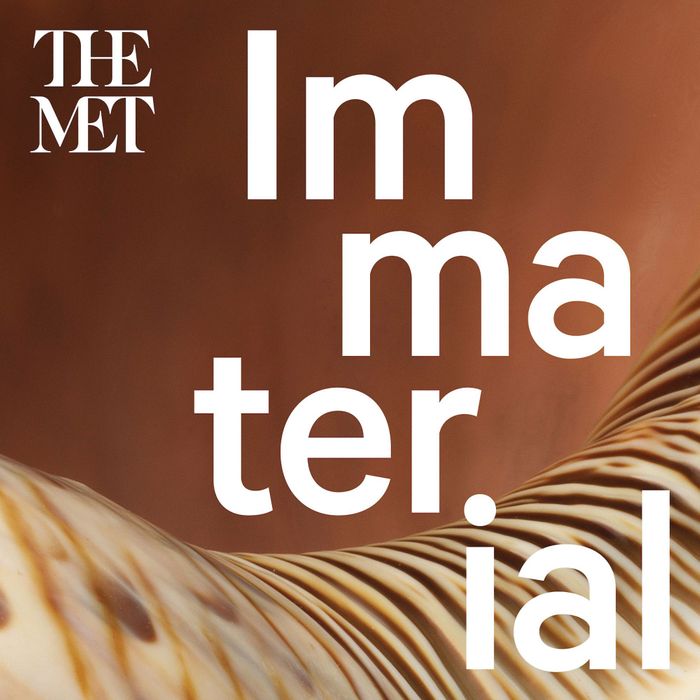
| If for whatever reason you haven’t been able to stop by a museum recently, and if you’re missing the cool stillness that usually accompanies such a visit — assuming, of course, you’ve avoided the peak crowd hours — Immaterial will do the trick. From the Metropolitan Museum of Art and the studio Magnificent Noise, Immaterial bottles that feeling you get when you’ve parked your butt on a gallery viewing bench, tired from all the walking and gazing you’ve been doing (alas, I’m getting old), and you’re just staring at the same piece for an extended period of time as you catch your breath. It’s tranquil, but your brain is still going. |
| As the title suggests, the show fixates on materials, and each episode is structured around a story or stories from an array of interesting people pertaining to a different kind of material: paper, concrete, linen, clay, jade, and so on. It’s hosted by the poet Camille Dungy, who guides the rhythm of each episode like a melody. What stands out is how the show evokes the tactile feeling of each material through playful sound design, which comes from Ariana Martinez. Some, like paper (rustle, rustle, rustle) are more straightforward than others (concrete: tap tap tap tap). |
| Immaterial is available on all platforms. The production team also includes Adwoa Gymiah-Brempong, Eleanor Kagan, Elyse Blennerhassett, Eric Nuzum, and Jesse Baker. |
| So here’s the thing. As a non-American invested in American culture, I’ve taken it upon myself to try getting into every single one of its beloved sports leagues. For the most part, I’ve carved out a decent track record: basketball, football, hockey, golf, rasslin’ — even, for a hot moment, NASCAR. The one glaring hole in my repertoire is baseball, which happens to be, I’m told, the most American of pastimes, at least until its current decline causes it to be supplanted by something else uniquely American, like frisbee golf. (The threat is real.) |
| Other than Moneyball (the greatest movie of all time), Shohei Ohtani (the Japanese Adonis), and the occasional World Series, I’ve generally found it hard to muster much feeling for the sport. So it’s a good thing that 1.5x Speed reader Rita J, a grad student and baseball aficionado from Chicago, responded to my weekly request for what you’re listening to and reached out with a list of hyper-specific recommendations of baseball podcasts. Seeing as how Rita stands as a solution to my problem, I decided to expand this into an interview. |
| 1.5x Speed: Walk me through your rotation of baseball pods. What do you listen to, and how do they fit into your day? |
| Rita J: My main rotation is comprised of White Sox-specific podcasts like South Side Sox, Sox Degrees, and White Sox Talk. CHGO White Sox recently got added in the mix. A few general coverage episodes might make it in any given week: Tipping Pitches, Effectively Wild from Fangraphs, Talkin’ Baseball from Jomboy Media, or The Athletic Baseball Podcast. A lot of the general podcasts are also released four to five times a week, so keeping up with every single one of them all the time would be a full-time job. |
| My favorite is the wonderful Sox Degrees, hosted by the two White Sox play-by-play announcers for TV and radio, Jason Benetti and Len Kasper. Both are such good interviewers and so smart about baseball — I think it would be a delight for fans of the Sox or otherwise. They just released a great episode with Dave Sims, the long-time Mariners play-by-play announcer, where they talked about his announcing history and how they approach broadcasting. It was such a great lens into a truly unusual profession. |
| What do you look for in these shows? |
| Rita: There’s sort of two answers here. For team-specific podcasts, I’m looking more for game-to-game coverage, plus discussion of coaching and managing decisions. It can be incredibly granular, but I find it’s the best way to get an understanding of how those microdecisions get made in-game and how those decisions look to people watching at home. Individual team podcasts rely on a bit of baseball history, but are extremely rewarding once you have a sense of who the key players are. |
| On a league-wide level, I’m looking more for expertise and breadth without regurgitation of widely discussed storylines. With a thirty-team league, listening to the same four things talked about across a variety of podcasts can get boring. So I try to keep a variety of different types of podcasts in my rotation for that reason. Effectively Wild is very stats-focused. Tipping Pitches is coverage from a labor-focused perspective. Rob Friedman’s Pitching Ninja podcast interviews pitchers with an absolutely astonishing amount of detail. |
| That said, I’d almost hesitate to tell someone just starting out to listen to a league-wide coverage podcast. They can get pretty deep in the weeds and can be alienating if you aren’t keeping tabs on the league as a whole. |
| I’ve tried getting into baseball over the years, but for some reason or another, I keep hitting a wall outside of the playoffs. What’s a good way to develop a fandom for the sport? Also, who should I support? |
| My first piece of advice for people who get bored by baseball on TV is to go to a game in person! Minor and independent league games are professional games, so if there’s a team in your area, check those out. Baseball is more engaging when you can see what everyone on the field is doing as opposed to watching a few fixed camera angles. I’d also say national broadcasts are more boring than local broadcasts, so if you’ve been turned off by them, try following a local broadcast with announcers who are calling 120-150 games a season for the same team. |
| If pace of play is more what’s keeping you away, check out baseball ephemera online. There are Twitter accounts devoted to bad baserunning, umpiring and its foibles, walk-off plays, Shohei Ohtani doing things, and tons of stat trackers for homers, stolen bases, advanced metrics, and Yasmani Grandal’s walk rate. There’s a bunch of different baseball YouTubers who cover all kinds of different things, but I’ll shout out the pair of Secret Base baseball docuseries on the Mariners and Dave Steib, as well as fun sabermetrician Foolish Baseball. |
| The only team I would tell someone specifically not to root for would be the Reds. The owner’s son demolished any remaining goodwill earlier this season by asking “where are you going to go” on a live radio show. Baseball owners are often villainous, but this was a new level of “really dude?” heard ‘round the world. |
| ➽ By the way, I interviewed the hosts of Sounds Like a Cult, which you can find here. |
| ➽ Because someone asked in response to last week’s “Ask a Cool Girl” segment: yes, Welcome to Your Fantasy could theoretically count as a Cool Girl podcast, I think. |
| ➽ Mission to Zyxx, the improvised science fiction comedy podcast currently published through Maximum Fun, is coming to an end when the show closes out its fifth season later this month. Big props to the team: Jeremy Bent, Alden Ford, Allie Kokesh, Seth Lind, Winston Noel, and Moujan Zolfaghari. |
| ➽ Quick shout-out to my colleague Jen Chaney, who’s hosting a new podcast series about the history of basic cable television with Doug Herzog, the television executive who was formerly the president of Viacom Music and Entertainment Group. The show is called Basic!… which, frankly, is a great name. The first three episodes are available today. |
| ➽ I will not rest until everybody shares my belief that Penn Badgley has the voice of an angel. Relatedly, the guy has his own podcast now. It’s called PodCrushed, and the conceit is that he reads out middle school stories sent in from listeners. Yes, it’s copping from Mortified, but if celebrities are gonna gentrify podcasting, make it sexy, you know? Badgley will be flanked by co-hosts Nava Kavelin and Sophie Ansari. |
| ➽ Props to the team at KQED’s Forum for the rebrand! |
| ➽ Obsessed with this Curbed piece, from last month, about post-pandemic breakups potentially being the cause of the current one-bedroom rental shortage in New York. |
| ➽ Because I seem to be on a real estate kick this week: I can’t quite recall how many times I’ve watched this tour of Kacey Musgraves’ home. That kitchen! |
| Post note. You’ve gone to some far-flung places, Believer. |
| And that’s a wrap for 1.5x Speed! Hope you enjoyed it. We’re back next week, but in the meantime… |
| Sign up to receive Vulture’s 10x10 crossword every weekday. |
| | |